



The Abyss: why career change feels bottomless
There's a phase in every career change I call the Abyss — the free fall with no visible bottom. Most people flee before they hit it. Here's what a year inside it taught me, and why the only way through is to want to be there.

You Don’t Need Anyone’s Permission: A burning Man Story
A week in the Nevada desert taught me the rules running our lives were never really rules at all. Here's the reframe — and it doesn't ask you to quit anything.

Career Change for Lawyers: Staying and Rebuilding When Burnout Strikes
Career change for lawyers rarely means a clean jump. Using poker, mahjong, and the research of Ibarra, Duke, and Whyte, here's how to know when to fold — and how to rebuild a practice you can be wholehearted about without leaving law entirely.

6 Signs You've Already Outgrown Your Career
You can be excellent at your job and completely done with it. That's not a contradiction — it's the trap high performers rarely see coming. Here are six signs you've already outgrown your career, and why outgrowing it isn't the same as regretting it.

You Don't Have to Have It Figured Out
Most people will change careers 5–7 times in their lifetime. The average age for a major career shift is 39. And nearly 40% of adults still don't know what they want to do with their lives.
So maybe the pressure to have it all figured out right now is a little misplaced.
Here are ten things worth knowing before you start.

OLD HABITS DIE HARD
Nine years ago I walked away from showing my photography after a show where nothing sold. I told myself it was rejection. It took almost a decade to see it was something else entirely — and a rejected workshop proposal this week brought it all back.
Being Good at Something Is Not the Same as Being Right for It
You built a career on competence. But competence and calling aren't the same question—and confusing them is a trap. Here's how to start asking the right one.

The White Collar Sweatshop
A 1980s study found lawyers experienced depression at five to six times the rate of the general population. The research has been public for decades. And yet law remains one of the most sought-after credentials in the world. The reason is more uncomfortable than the statistics — and it has everything to do with identity, institutions, and the question most high-performers never stop long enough to ask.

You’re Not Burned Out. You Stopped Learning.
You're still performing. Clients are happy. The work is getting done. But something has gone flat — and you can't quite name it. What most high-performing lawyers call burnout is often something different: you've stopped learning, and your brain knows it before you do. Here's the cognitive framework that explains why mastery can become a trap, and what it actually looks like to climb again.

The Thing Therapy Doesn't Do.
Therapy and coaching aren't the same thing — and they're not competing. If you're a high-performing lawyer who's already doing the inner work but still feels stuck, the missing piece might not be more insight. It might be structure. Here's how to tell the difference, when each one is the right call, and why the people who do both make the fastest progress.
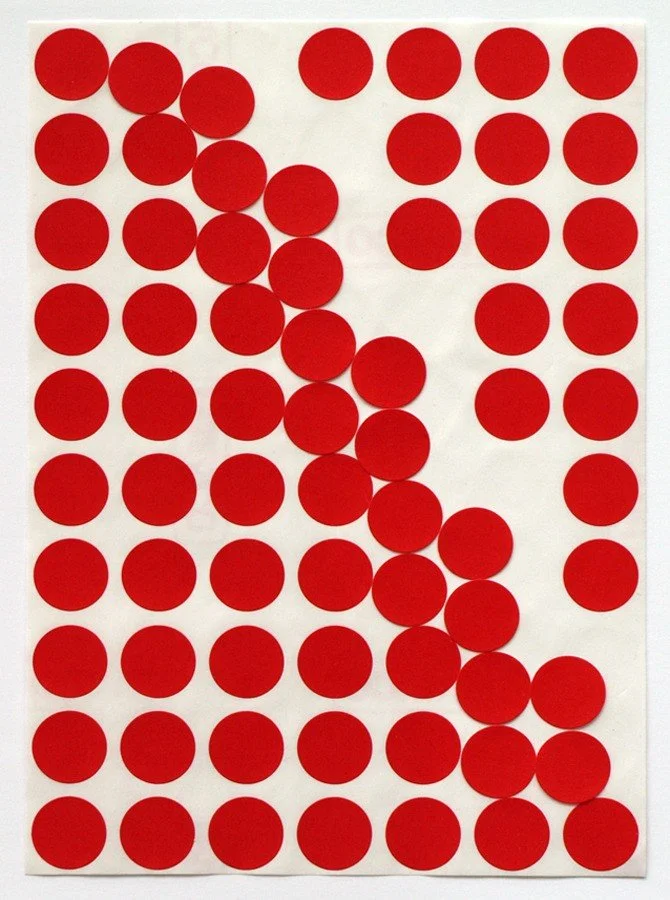
THE RED DOTS
By day four, I was starting to worry. Why wasn't anything selling? Why were there no red dots on the wall?
I didn't sell one piece that week. It sucked. And I haven't shown my work at an art fair again since.

THE MAGICIAN
Sometime around 2015, I stumbled onto a video of a magician named Jared Kopf performing on Penn and Teller's Fool Us.
Somewhere in the middle of his act, he mentioned that his mother had been disappointed when he went to law school.
I laughed. And then I felt something I didn't have a name for yet.
Last week, I saw him perform again. In person. Small room, thirty people. Long beard. Dressed entirely differently. Settled into himself in a way that was impossible to miss.
He had become something.
And I realized — the question I had been carrying for ten years was never really about law.

The Buzzer.
The stillness. The eyes that go somewhere else. The body that doesn't move while you can see that there is so much going on in her head.
I thought I knew exactly what was happening inside her — that the person who she thought she was before she got on that stage was not the person who actually showed up when she was in the spotlight.
I wanted to go up there and stand beside her and help her. But, of course, I couldn't.

The Case for Pushing Through (And Why I Finally Dropped It)
Pushing through works.
It got the deal done at midnight. It kept the client from losing their mind. It made you indispensable. It got you to partner.
I'm not going to tell you it's naive or weak or unsophisticated. It's none of those things. It's a strategy — and a remarkably effective one.
But I want to ask you something.
What is it costing you while it's working?

When smart people don’t know what to do
A perhaps unpopular opinion: Law is for smart people who don't know what they want to do.
The Hedonic Treadmill: Why Lawyer Success Never Feels Like Enough
A 19th-century "hack" for donkey races explains why our modern careers feel like a dead-end pursuit.
When Coaching Work is Just Another Way to Avoid a Decision
Why insight and self-reflection sometimes become a mirage instead of a path forward.