
Yes, You Can Do It All — The Question Is How
Welcome to My Musings. Where I share insights that have impacted me, thoughts on personal growth, and actionable strategies to help you navigate career and life.
A couple of months ago, I met someone during a round of golf. He and I sort of knew who each other were, but we’d never met before.
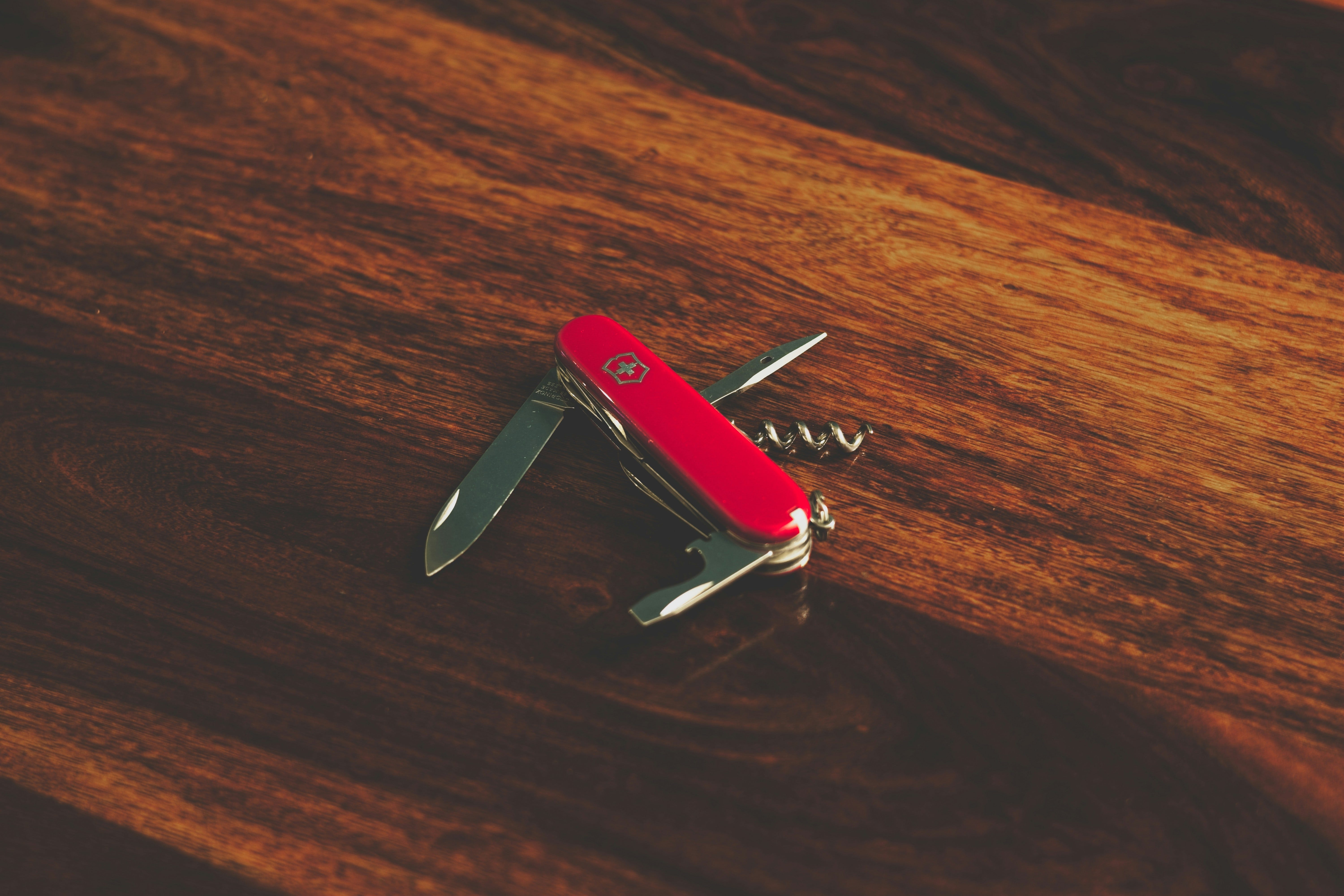
But, when we actually shook hands, he said something surprising: “I know a bit about you. You’re like a Swiss army knife.”
At first, I just laughed. But it stuck with me. It was a compliment, sure - but also an invitation to think about something that’s been tugging at me for years: The pressure I have felt for so long to define myself by a single label.
The Problem with the “One Thing” Rule
I’ve always hated writing bios. You know that line before you’re introduced on stage where they summarize your entire existence in two sentences? Every time, I stare at the screen thinking: What do I even write?
How do I boil myself down into a convenient thirty second introduction?
Am I a coach? A facilitator? A writer? A lawyer?
A photographer? A dad? A runner? A musician?
Yes. All of them.
But, time and time again, the world seems to say: “Sure, that’s great. But just pick one already and stick with it.”
This is especially pertinent in the helping professions - everyone preaches about “niching down.” Pick a lane. Serve one audience. Be the best at one thing.
The same message ruled the legal world when I practiced law: “Be an expert, not a generalist. A jack of all trades is a master of none.”
And yes - there is some truth to that. If you spread yourself too thin, mastery takes longer. But lately, I find myself asking: So what?
Do you need to be an expert at one thing to do well? Says who?
The Myth of Mastery (and Why It’s Overrated)
I read an article that argued: you can do it all - as long as you master one thing first. The idea was that most CEOs start with one core expertise - deal-making, finance, HR, whatever - and build around it. They expand over time.
But not out of the gate.
That made me pause. I thought: Maybe I’ve been doing this wrong. Maybe I should’ve stayed in law. I was good at that. I put in the hours - at least 10,000 (to rely on Malcolm Gladwell’s 10,000 Hour Rule).
But then I remembered something important. When I did try to impose a more narrow scope on what I was doing - to drop photography, or music, or anything “non-essential” to my core business of law - I didn’t just lose hobbies.
I lost energy.
I found I was less effective at not only the core business, but also at all those other things that were “non-core” - because the so-called “extra” things were actually the fuel that made me better at everything else.
The Swiss Army Knife Life
The largest multitool ever devised had 141 functions - scissors, corkscrew, screwdriver, tweezers, saw, magnifying glass, toothpick, etc., etc., etc.. It was impressive. But it was also heavy, clunky, and confusing. Try carrying that around and using it and see how much fun that is.
On the other hand, a switchblade is sleek, simple, efficient. But it’s limited. It does one thing. Really well.
But, let’s face it - it’s kind of boring.
In between, however, is the nimble Swiss army knife.
Enough tools to be useful, not so many that you can’t fold them back in.
You can do it all - just not all at once.
Time is finite, sure. But over a lifetime? You can explore a lot of terrain. The trick is managing the costs - the trade-offs - without amputating parts of yourself that bring you joy and vitality.
Why You Shouldn’t “Stay in Your Lane”
And yes - at some point in any profession, you might be asking yourself, “Well, this is going great, but it’s taking so much time. How can I possibly do all the other things I want to do?”
The short answer is most often, “You can’t - so just focus on what you’re best at/what pays the most/what makes the most ‘sense’”.
I prefer to reframe it:
You don’t have to accomplish everything.
You just have to engage with everything that calls to you.
That means giving yourself permission to experiment - to learn, to explore, to play - even if it doesn’t “fit” your job description.
It means trusting that what makes you curious is not a distraction. It’s direction to something more.
More texture in your work. More richness in how you are able to serve people. More aliveness in how you approach your day-to-day.
Think of a tapestry - the different colours, the imperfect weaving, the way threads cross and collide. That’s what gives it depth.
The same is true for your career. When you let yourself explore - photography, writing, running, gardening, whatever it is - you create richness. The kind that spills over into your work, your relationships, your creativity.
Because doing more than one thing doesn’t make you scattered.
It makes you whole.
A Question to End On
So maybe it’s time to stop asking “How can I fit it all in?”
And start asking:
👉 What am I ignoring that actually feeds me?
👉 What am I avoiding that could make me better at the thing I’m already good at?
Go forth, be a Swiss army knife — and let me know how it goes.