
Your Career Isn’t Broken. It’s Just Out of Order.
“A story should have a beginning, a middle and an end, but not necessarily in that order.”
Jean-Luc Godard
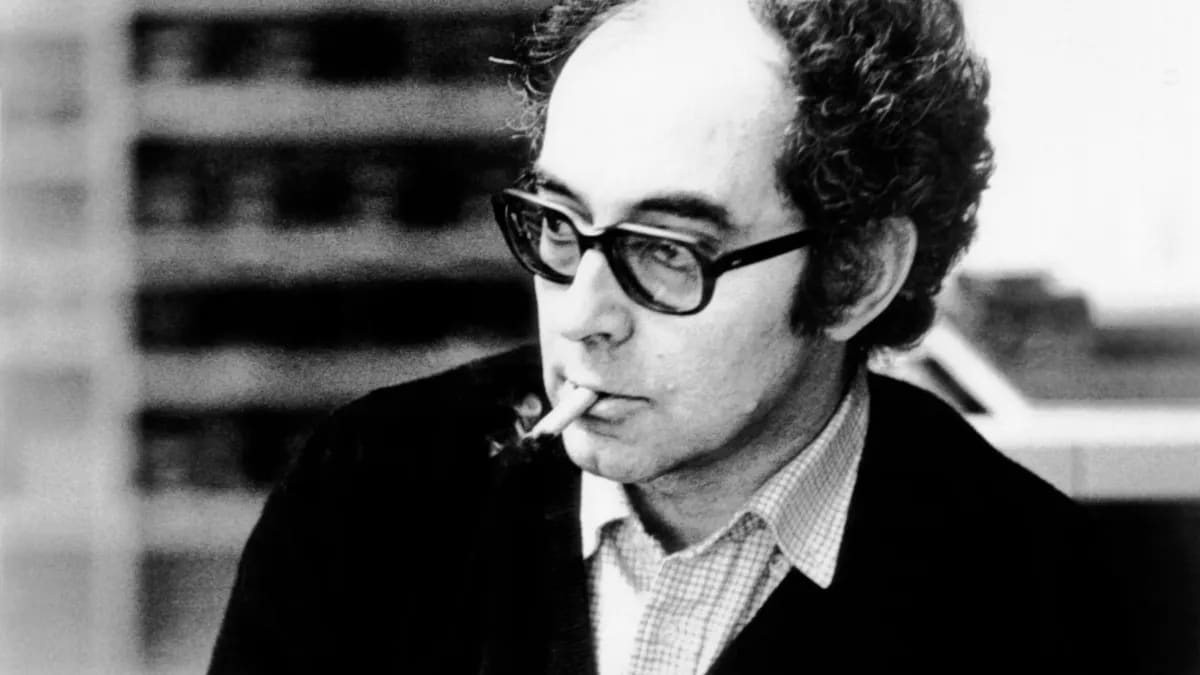
I didn’t expect to come across Jean-Luc Godard in a book about the Middle East. But there he was, reminding me that, even the most perfectly composed stories, don’t necessarily unfold in the order you’d expect.
The authors of the book I was reading were relying on Godard’s view to prove a point - that, despite our usual ways of understanding how things are supposed to go, we are often surprised by the lack of order, dearth of discernible process, and yet, satisfaction in how things turn out in the end.
In life, sometimes we’d call this “one step forward, two steps back.”
In work, others might call it the “non-linear career path”.
Fundamentally, they are saying the same thing.
But, what does that even mean? See below (and this could be mine, so far):
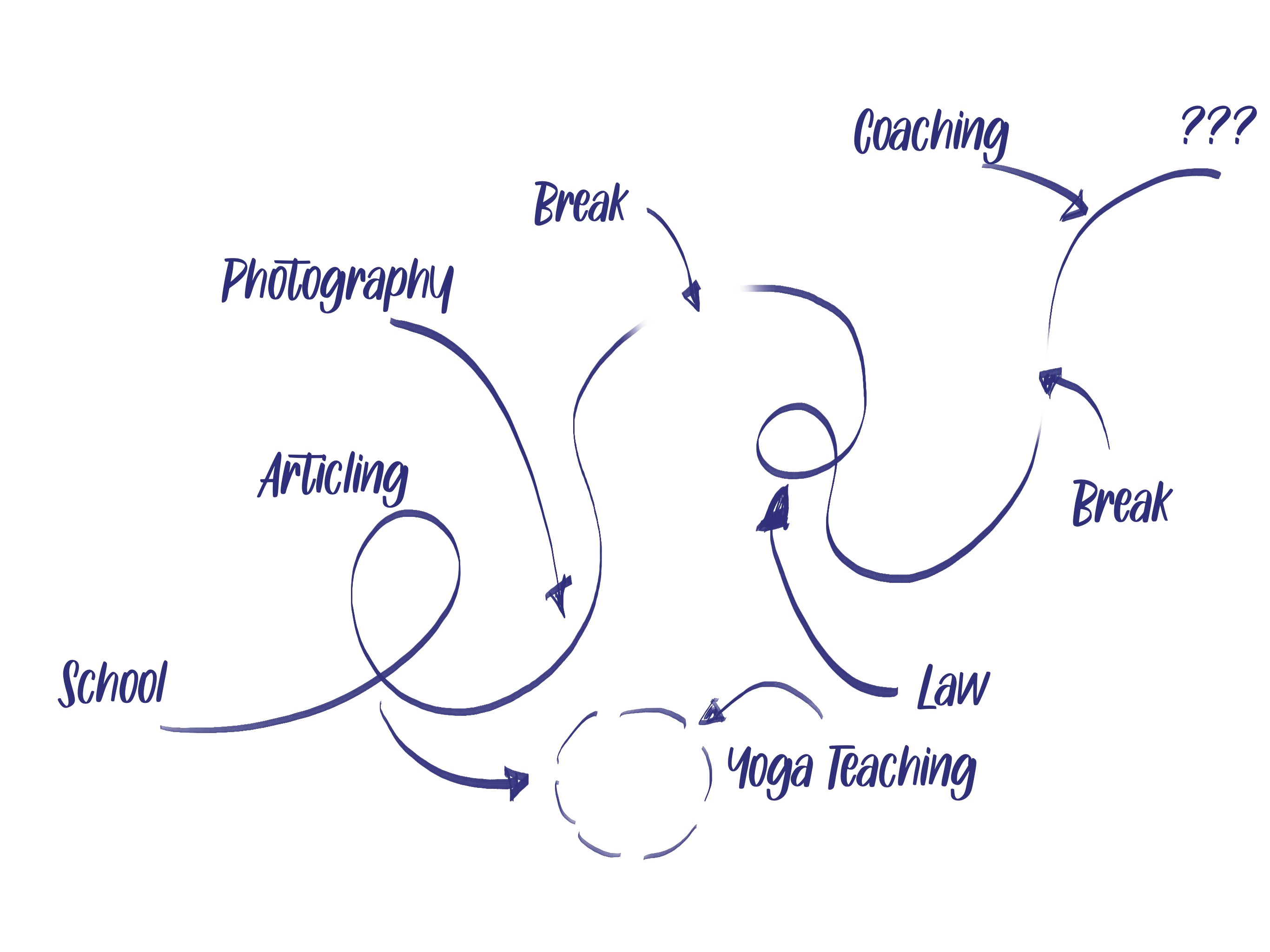
As you can see, there is no direct line here. No straight path to follow and the outcome is, if anything at all, less than certain.
But, why is this a surprise? Isn’t this how it always goes? When, in real life, does someone not have a non-linear path?
I think the fundamental difference is in how we expect things to go vs. how they actually go.
Again, see below for illustrative explanation.
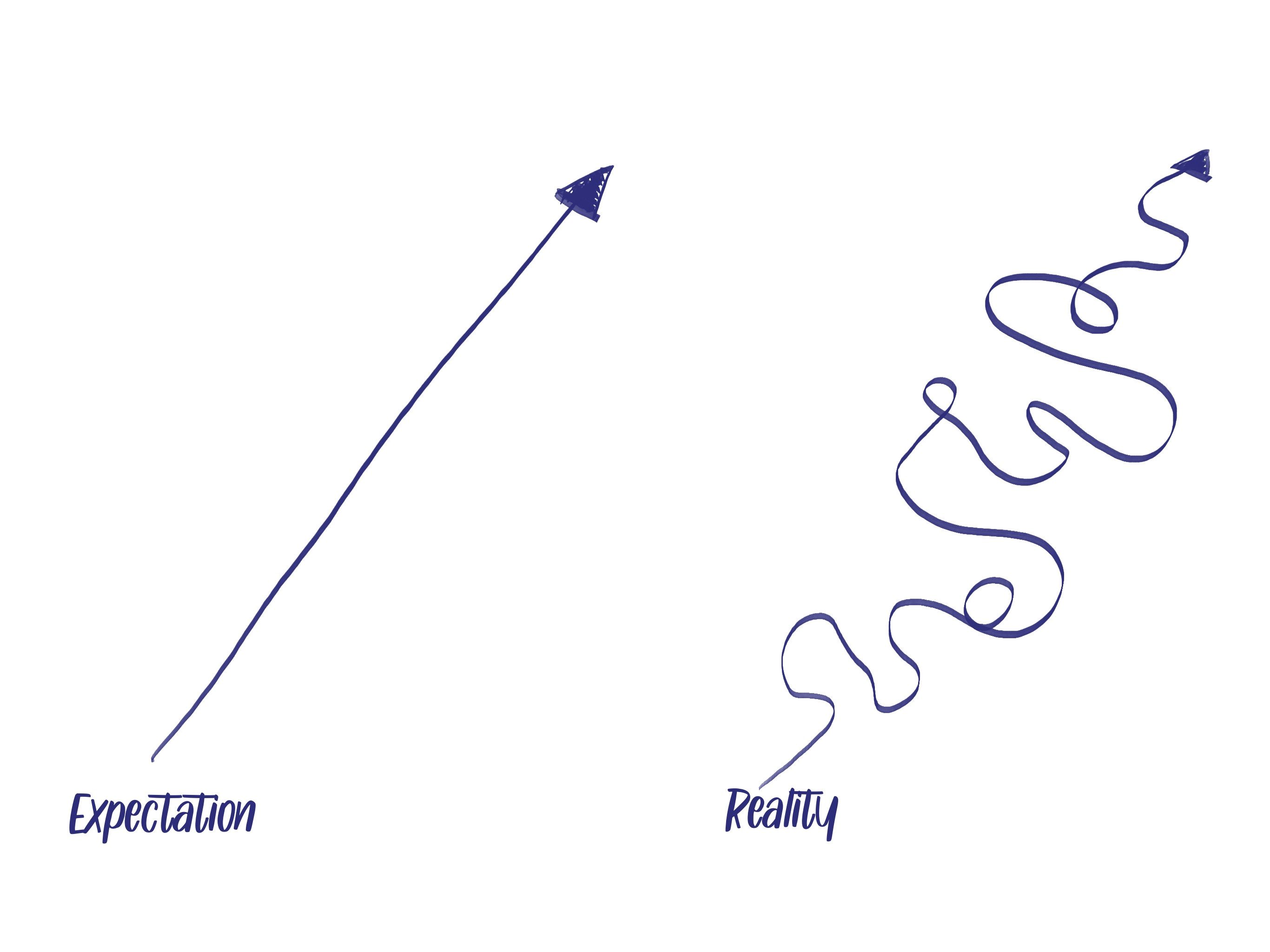
It’s one thing if you plan for it to go this way. It’s another if it’s a total surprise.
And, I think, that’s fundamentally what Godard is after - that, you can either allow yourself to “fall” into the well-worn path (and this is über common amongst lawyers) - or - you can choose to intentionally place things out of order.
Like Tarantino’s Pulp Fiction, Nolan’s Memento or Godard’s 1960 hit, Breathless, you can write and direct things to take place completely out of order, and yet, still make (more or less) sense.
But, how?
Reject Convention
Godard rejected the rigid storytelling formulae of Hollywood at the time he was making film - the very predictable three-act structure that dominated stage and screen for decades.
He believed that storytelling shouldn’t be confined to linear cause and effect logic and that life, memory and consciousness don’t unfold that way. So, why should film?
And, why should a career? To the extent that career is any different from the rest of life (I would argue, it really isn’t), what may matter is less the sequence and more so the experience.
Some might say that I always tried to defy convention. And this was often met with looks of confusion and questions:
-
Why would you want to start your own firm when you could work somewhere else?
-
Why would you want to spend time making art or film when you could be doing something more prestigious?
-
Why would you leave law when you have it so good if you just stay on your current track?
I don’t have good answers to any of these questions, besides to look to Godard’s words and respond: “Well, sometimes, things don’t really need to make sense. They don’t need to go in any specific order. They don’t need to line up with convention.”
That doesn’t make it any easier, by the way. In fact, I think it makes it harder. Much harder. Even so, that doesn’t take away from the fact that it also feels, shall we say, exciting. It feels interesting. It feels like it’s more how things should go for me rather than for everyone (or anyone) else.
Feeling, Not Formula
In other words, it feels more like a story than recipe.
You know, when you read a good piece of fiction? Or watch a great movie? Or tell a story from your own life to friends that makes you laugh and wonder?
What makes those so good? It’s not the facts of the story, I assure you.
Consider the case of a litigator - his or her role is, amongst other things, to present the facts of what has happened between the parties as one in which his or her client is deserving of remedy (or defence against a remedy sought by the other) and how the law ought to apply to those facts.
Or consider the portrait painter - he or she is certainly trying to get an accurate picture of the subject - depicting the light, the way the hair lands on the subject’s forehead, the way the folds of the subject’s dress fall just so.
But, in both cases, there is more going on. The facts are the structure - the architecture - onto which the stories are laid. And those stories aren’t mechanical - they can be rearranged, shuffled, viewed from different perspectives - that still create coherence and create emotional resonance.
In other words, there is freedom in telling a story - including your own story - that way. And that is a good feeling.
Now, I’m not saying be hedonistic and just go be free - that could be irresponsible and perhaps reckless, even if it defies convention. But, notice - when do your choices feel free and when do they feel constrained? I would guess that, when we buck against convention and do things in a less-than-ordinary way, there is the chance to feel freer - more in control - and more optimistic about what comes next (even if out of any sort of discernible order).
Break Some - But Not All - Rules
Godard wasn’t just talking about film. He was talking about the courage to live out of sequence - to trust that meaning can emerge even when order falls apart.
So, how do you start to get off the structure of things a bit more? How do you actually buck against convention?
As I said above, I don’t think it’s about simply abandoning order, moving to a communistic apartment share “situation” and taking a lot of LSD (although, there are definitely times this has sounded appealing).
It’s something else. It’s something you have absolutely heard before:
Play. Take small chances. Make things just slightly weird for a small period of time.
And how do we play? We break rules.
-
Do you always put sugar in your coffee? Don’t. See how it is.
-
Do you always respond to emails in 24 hours? Don’t. See how it is.
-
Do you always watch TV before bed? Don’t. See how it is.
Not all rules are meant to be broken of course. Please do not start running red lights or stealing candy from the bulk aisle at the grocery store.
But, it might not kill you to reject some of your own tradition. In doing so, Godard was inviting both filmmakers and film watchers to break the rules of structure in favour of play. To experiment with and rearrange narrative elements in order to find other rhythms, dissonance, and harmony in all the places you would least expect.
He was essentially saying: “You can tell the truth about life even when you break the rules of storytelling - maybe because you break them.”
“A story should have a beginning, a middle, and an end — but not necessarily in that order.”
Turns out, neither should a career or a life.
What’s the most “out of order” chapter of your life that eventually made sense?
I work with people - teams and individuals - to figure out what’s holding them back from what they want to do, where they want to go, and who they want to be.
To get Unstuck.
If you want to talk about what’s coming up for you, get in touch.